7 min read
Do ghosts meet? I don’t mean whether two ghosts occasionally bump into each other in a corridor. I mean properly meet. Get together, exchange ideas, discuss the issues affecting them. Have a conference.
It might initially sound like a ridiculous question, but having spent a career working in international business events, I find myself wondering: do ghosts still network in the afterlife? Perhaps a haunting is just an attempt to make a new connection. We assume they’re trying to frighten us, when they might simply be trying to introduce themselves and do business.
We generally seem to imagine them as solitary figures. There’s someone stood on the stairs, a figure in the cellar, an apparition at the window. Occasionally you might get a whole haunted household. Even then, they seem to keep themselves to themselves. Surely, after a few centuries, you’d fancy a change of company.
If you’ve been haunting the same building for several hundred years, you might welcome a few days away with a new audience. A chance to compare notes with like-minded spirits, find out what’s happening elsewhere and catch up on the latest innovations in haunting, just to see whether anyone’s trying anything new. Perhaps you’ve been making the same noise in the same attic since the eighteenth century and would quite like to try something different, but don’t know where to start. That sounds like a reasonable basis for a conference to me.
A spirited discussion
I’d be interested in the programme. What are the big issues facing ghosts these days? Is the traditional apparition still effective? Rattling chains are a little dated, right?
The longer I think about it, the more I wonder whether we’re overlooking an entirely untapped audience for conferences. One with centuries of experience and, presumably, relatively few diary clashes. Unless someone has committed to appearing at the same window every evening, perhaps the stroke of midnight, availability shouldn’t be much of a problem.
There’s a commercial argument here, too. They’d be fairly easy on the catering budget. Plenty to bring to the table, without needing anything served on it.
Keeping the conversation alive. Sort of.
I wouldn’t want to lose the coffee breaks, even if nobody needed the coffee. There still needs to be time to catch up with people, follow up on something interesting and quietly ask another delegate whether they understood the last session.
Perhaps they’d spend it complaining about their buildings. One has had to put up with a refurbishment, another is now part of a wedding venue, and a third has been included in a ghost tour without anyone asking. After a few hundred years of keeping all that to yourself, I imagine it would be quite a relief to find someone who understood.
They might also have something useful to contribute to conferences that already exist. A ghost who had occupied the same building for three centuries could offer an unusual perspective on its history. There’s also the question of institutional memory. A ghost could be quite useful when nobody can remember why a decision was made. They were there. They might even know where the paperwork is.
There would be some practical questions, though. Would extra venue space actually be required? Perhaps this is the ultimate co-located event - two conferences in the same room, with only one audience aware of the other. And, if you can walk through walls, venue access becomes considerably easier.
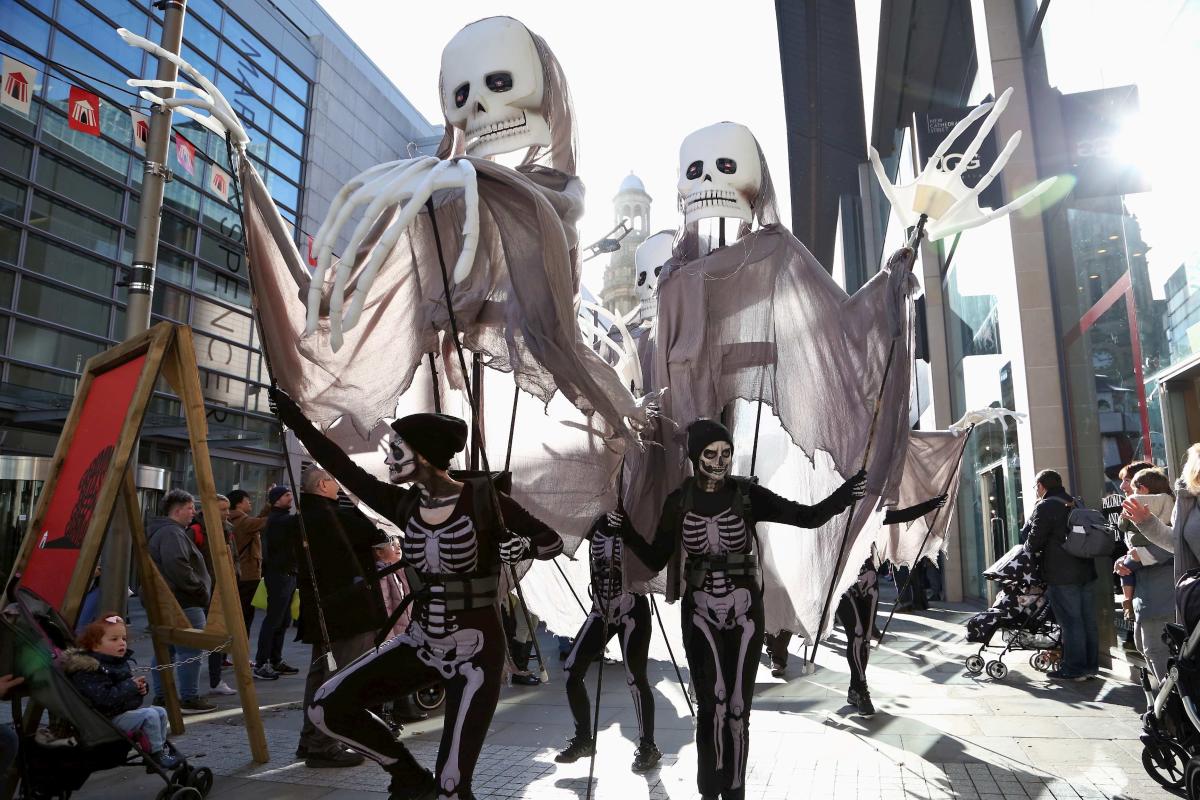 Halloween in the City, Manchester (courtesy of CityCo)
Is a séance technically a hybrid meeting?
Travel could be a sticking point. Are ghosts able to leave their buildings, or have I got carried away developing an audience that can’t actually attend? Perhaps some can travel and others can’t. We’d need a way of bringing everyone into the discussion, which raises the question of whether a séance is technically a hybrid meeting. It connects people in different places, so maybe it’s more a Teams call for the afterlife. “Can anyone hear me?”, you might ask.
Registration could be awkward, too. No-shows take on a rather different meaning.
I suppose the real question isn’t whether ghosts meet, but who on earth does their event planning. Are there event agencies in the afterlife, or is everyone expected to organise their own haunted get-togethers?
Manchester gets Gothic
Before I get too far into an imaginary event brief, there is a genuine local connection. Manchester is proudly home to the Manchester Centre for Gothic Studies at Manchester Metropolitan University, and the city has hosted several international gatherings around Gothic studies, ghosts and haunting.
The International Gothic Association brought its 14th conference to Manchester in 2018. More than 300 delegates attended, with the theme Gothic Hybridities. The programme featured more than 80 presentation topics, ranging from Gothic Dolls and Digital ‘Ghosts’ to vampire-werewolf hybrids and the tropical Gothic. There was even a Frankenstein cake as part of an event marking 200 years since the publication of Mary Shelley’s novel. (Read our case study here)
That wasn’t a one-off. Gothic Crossroads 2025 explored the places where Gothic and horror cross into other disciplines, including gaming, architecture, heritage, comics, music, geography and environmentalism. Then, in 2026, came Global Ghosts and Regional Hauntologies, bringing together researchers from Manchester Met and St Teresa’s College in Kerala, India.
The Social Haunting and Ghost Labs work at Manchester Met particularly caught my attention. This isn’t paranormal research. It explores the idea of “social haunting”, how the past can remain present in communities and continue to shape people’s experiences. The Ghost Labs bring communities together with researchers and artists, using creative activities to explore things that might otherwise be difficult to articulate.
Dr Sarah McNicol at Manchester Met put it nicely. The work, she says, is about becoming “more aware of the ghosts from the past (that are still present today)” and using them to help “reimagine a different, and better, future.” That seems relevant to an article about meetings. At their best, they bring people together to consider what came before and what might happen next.
And then there’s Manchester Met’s DⱯRK Arts Research Kollective, an interdisciplinary research community exploring areas including occulture, the paranormal, magic, esoterism and counterculture through art and creative practice. Its interest isn’t simply in these subjects, but in how they might lead to new forms of storytelling and different ways of thinking about the world.
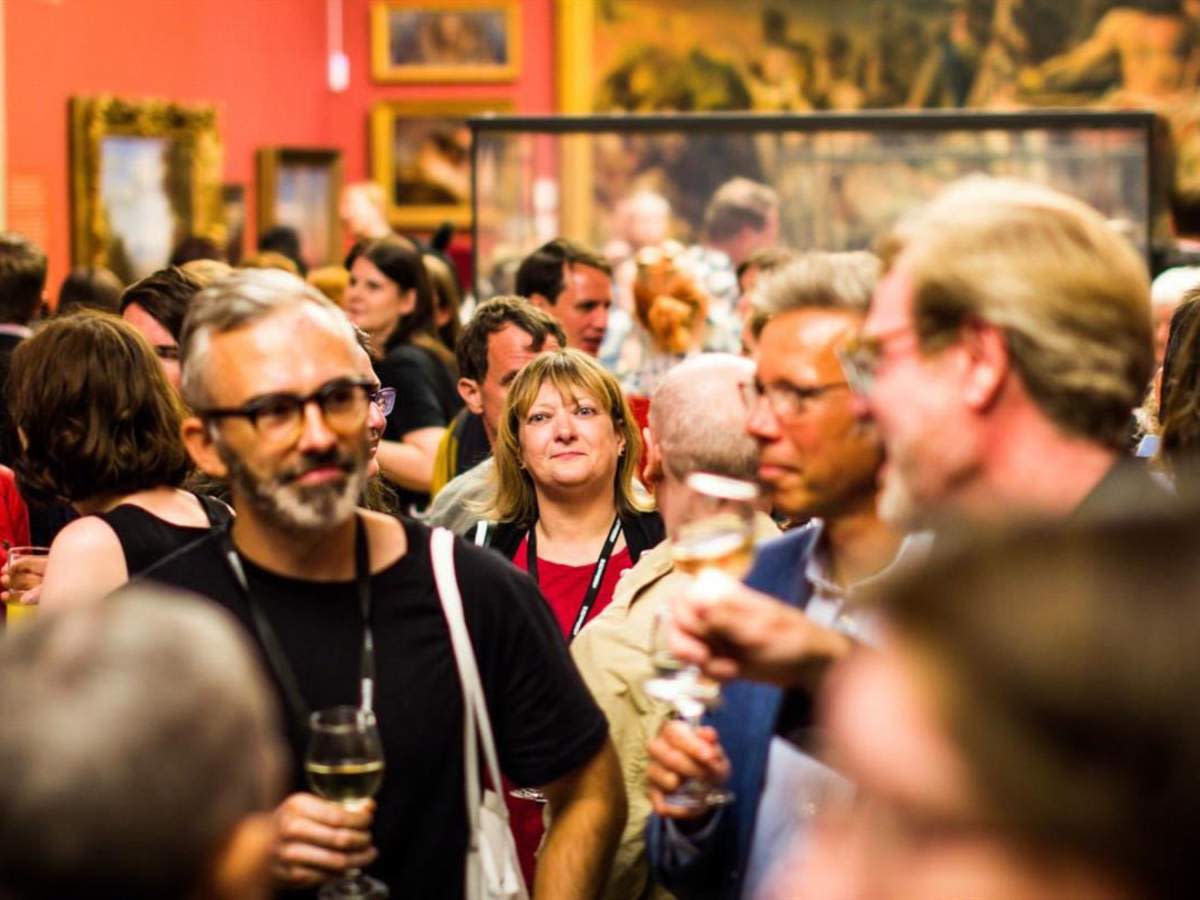
International Gothic Association Conference 2018, Manchester, Hosted by Manchester Metropolitan University
Before we move on…
Manchester has embraced a visitor angle to all of this, too. Dark tourism is well established, but is there such a thing as dark business tourism? We spend plenty of time thinking about the next generation of delegates. Perhaps we’ve overlooked the previous ones.
Haunt Manchester explores Greater Manchester’s darker histories and its Gothic, alternative and distinctly weird and wonderful side, from its architecture and hidden heritage to ghost walks and the stories that have accumulated around the city. The Manchester Gothic Trail Map, collaboration between the Manchester Centre for Gothic Studies, Jonathan Schofield, CityCo and the Manchester Accommodation BID, explores the city through a distinctly Gothic lens. The trail takes visitors through Manchester’s Gothic heritage, adding another dimension to the city’s relationship with the supernatural. if Manchester’s ghosts really are gathering somewhere, there are certainly plenty of suitable venues.
I still haven’t answered my original question. Perhaps ghosts are perfectly happy keeping themselves to themselves. Perhaps they have a thriving international association and we’re simply not on the mailing list. Either way, I quite like the possibility that a haunting might be a misunderstood introduction, someone trying to make a connection rather than frighten everyone out of the room. Perhaps they’ve been trying to join the conversation for years and we’ve simply been terrible hosts.
Maybe the best connections last a lifetime… and considerably longer.